

How To Avoid Common Obstacles For Robotic Pool Skimmers and Cleaners
Pool skimmers and cleaners work best when pool owners meet them halfway. A few minutes of prevention can save hours of frustration—and keep your pool cleaner, clearer, and more enjoyable all season long.
How To Avoid Common Obstacles For Robotic Pool Skimmers and Cleaners
Robotic pool skimmers and cleaners are designed to make pool ownership easier. However, there are several obstacles such as toys, pool hoses, and even high water levels that can turn your helpful cleaning equipment into an aimless and underperforming mess. But with a little preparation, pool owners can dramatically improve how well their skimmers and cleaners perform around obstacles.
Keep the Pool Surface and Floor Clear of Large Debris
Pool skimmers and cleaners are great at handling leaves, bugs, and your regular pool debris, but their cleaning abilities might be hampered by other items left in the pool from use.
Common culprits include:
-
Kickboards and pool floats
-
Goggles, dive rings, and water polo balls
-
Larger fallen branches or palm fronds
-
In-pool furniture items like tables or chairs
If these items seem to block your pool skimmer’s ability to cruise the water surface, consider taking them out of the pool after use. Before running your cleaner or skimmer, do a quick visual sweep and remove anything large or heavy from the pool. Think of it as “clearing the runway” so your equipment can do its job uninterrupted.
Manage Floating Hoses and Cords
Many suction-side, pressure-side, and robotic pool cleaners rely on hoses or power cords to move freely. When these get tangled or wrapped around themselves, ladders, drains, or pool surface skimmers, their cleaning abilities are dramatically reduced.
Tips to prevent tangles:
-
Straighten hoses and cords before use
-
Use hose floats, weights, or swivels if recommended by the manufacturer
-
Avoid excessive hose length—use only what’s needed for your pool
-
Periodically reposition hoses to prevent coils from setting in
While hose floats work to lower the hoses below robotic pool skimmer pathways, reducing the hose length will protect underwater pool cleaners against tangles. A well-managed hose keeps your cleaner moving smoothly instead of being obstructed by itself, spinning in circles.
Watch Out For Areas In Your Pool’s Layout That Create Traps
Modern pools often include steps, benches, tanning ledges, drains, and water features—all of which can confuse or trap automatic pool cleaners and some pool skimmers.
Problem areas include:
-
Sharp step edges
-
Raised main drains
-
Sun shelves with shallow water
-
Tight corners and coves
-
Built-in skimmer ports
What helps:
-
Adjust pool cleaner settings or weights for better navigation
-
Use manufacturer-recommended accessories for steps or ledges
-
For pool surface skimmers, like our Betta skimmers, try to use a pool noodle in the built-in skimmer port opening so they can avoid getting stuck.
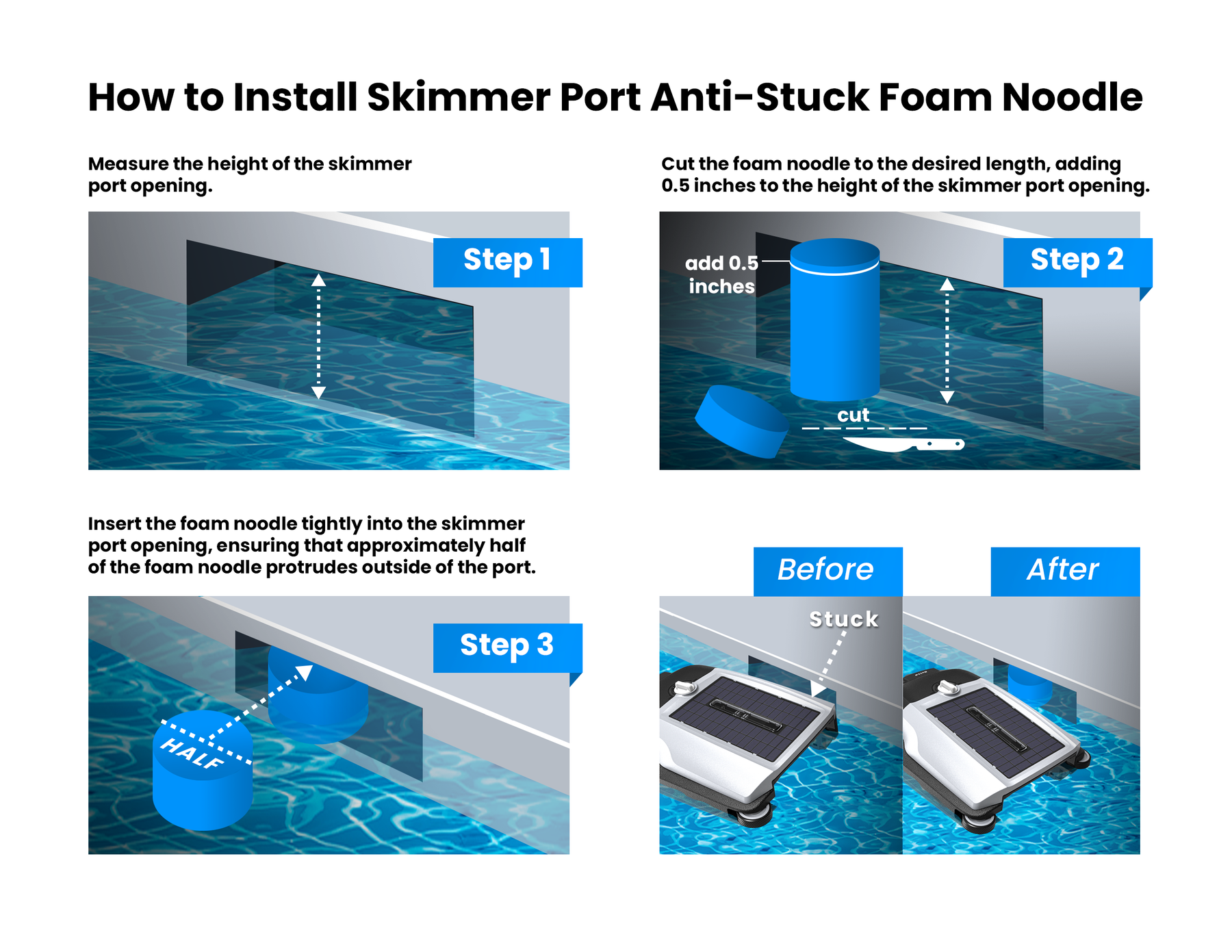
Watching to see where your pool skimmer or cleaner struggles might help you be able intervene early instead of needing to rescue them daily.
Maintain Proper Water Levels
Water level plays a surprisingly big role in skimmer performance, including built-in skimmers as well as robotic pool surface skimmers.
For built-in skimmers, water levels that are too low will cause them to be unable to create enough suction to catch debris. Too high, and floating debris may never reach them as it will float above the skimmer port opening.
For robotic pool skimmers, too high of a water level might interfere with their sensors seeing pool walls, causing them to bump up against the sides of pools. However this issue isn’t a problem for our Betta Flex, as it has sensors underneath the water to work with a wide array of pool types, including infinity pools.
Ideal rule of thumb:
Keep water level at the midpoint of the built-in skimmer opening, which usually also works for robotic pool skimmers.
This ensures:
-
Strong surface pull for leaves and debris
-
Consistent skimmer suction
-
Reduced strain on pumps and motors
Check water levels regularly, especially during hot weather or heavy rain as weather can rapidly adjust your pool’s water level.
Trim Landscaping Around the Pool
Overhanging trees and shrubs don’t just add debris—they can physically block skimmers and overwhelm cleaners.
Landscaping issues to watch for:
-
Branches dropping larger branches or twiges directly onto the surface
-
Fine debris like pollen clogging filters
-
Excessive organic matter causing cleaners to fill too quickly
Simple fixes:
-
Trim back overhanging branches
-
Empty skimmer baskets and cleaner filters more frequently
Less overhanging plants and trees usually means less debris ends up in your pool. This lowers the chances that larger obstacles block your robotic pool skimmers and cleaners, ensuring a smoother operation.
Perform Routine Equipment Checks
Even the best setup and preparation won’t help if your equipment is worn out or clogged.
Stay ahead by:
-
Emptying skimmer baskets regularly
-
Cleaning cleaner filters and debris bags
-
Inspecting wheels, brushes, and tracks on your skimmer and cleaner for wear
-
Replacing worn parts before they’re pushed to failure
Routine maintenance reduces breakdowns and prevents small issues from becoming major obstacles.
Final Thoughts
Pool skimmers and cleaners work best when pool owners meet them halfway. By clearing obstacles, managing hoses, maintaining water levels, and keeping the pool environment tidy, you’ll get better performance, fewer interruptions, and longer equipment life.
A few minutes of prevention can save hours of frustration—and keep your pool cleaner, clearer, and more enjoyable all season long.